ແນະນຳ
Congratulations on your new Singer sewing machine. You are about to begin an exciting adventure in creativity. From the moment you first use your machine, you will know you are sewing on one of the easiest to use sewing machines ever made.
We recommend that, before you start to use your sewing machine, you discover the many advantages and the ease of operation by going through this instruction book, step by step, detailed for your machine.
ເພື່ອຮັບປະກັນວ່າເຈົ້າໄດ້ຖືກສະຫນອງໃຫ້ສະເຫມີກັບຄວາມສາມາດຕັດຫຍິບທີ່ທັນສະໄຫມທີ່ສຸດ, ຜູ້ຜະລິດສະຫງວນສິດທິໃນການປ່ຽນແປງຮູບລັກສະນະ, ການອອກແບບຫຼືອຸປະກອນເສີມຂອງເຄື່ອງຫຍິບນີ້ໃນເວລາທີ່ພິຈາລະນາມີຄວາມຈໍາເປັນ.
SINGER® is a registered trademark of The Singer Company Limited. Copyright © 2000. All rights reserved throughout the world.
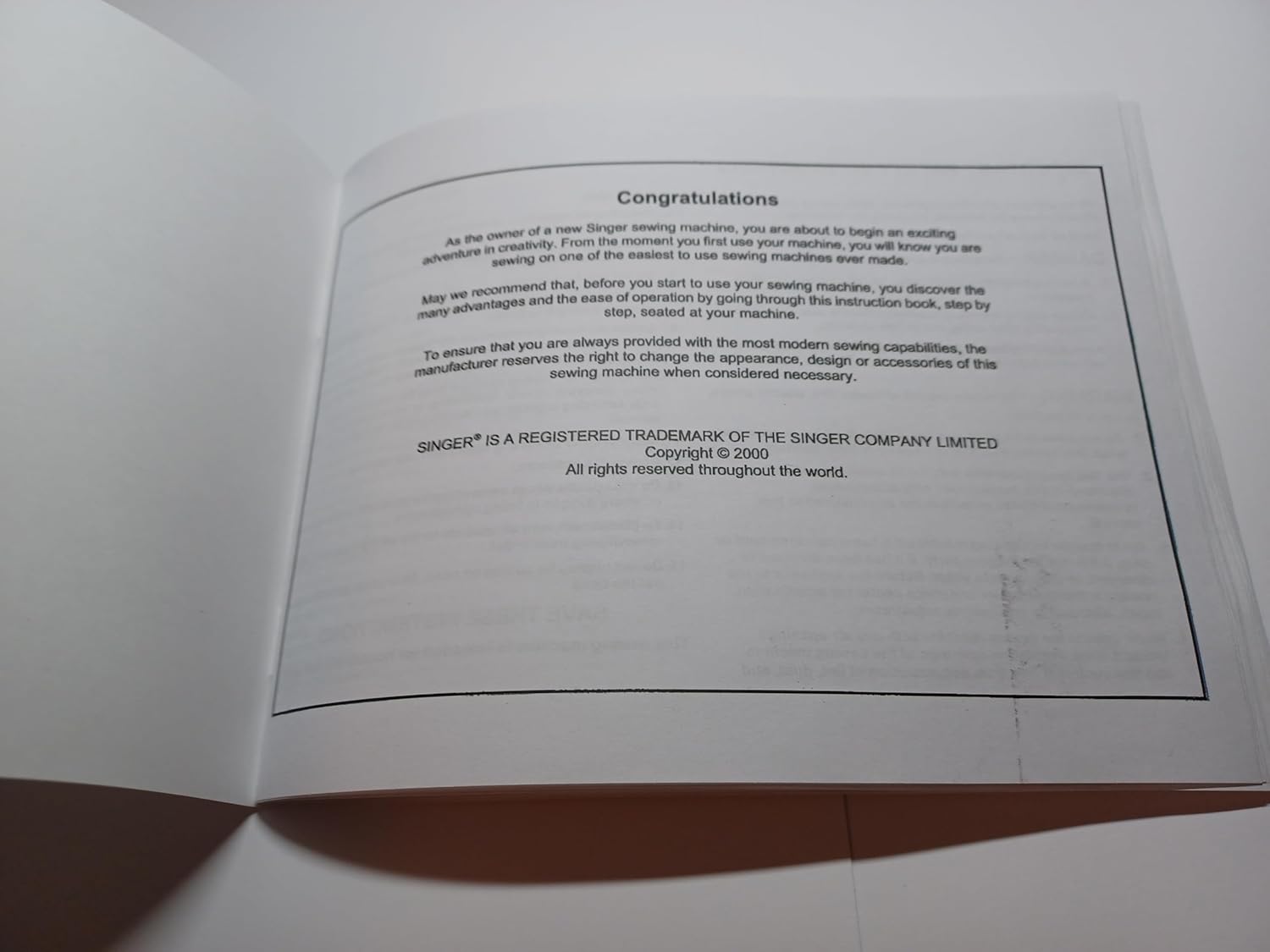
Image: Page from the Singer Model 1116 Instruction Manual displaying the 'Congratulations' message and copyright details.
ຄໍາແນະນໍາຄວາມປອດໄພທີ່ສໍາຄັນ
ເມື່ອໃຊ້ເຄື່ອງໃຊ້ໄຟຟ້າ, ຄວນລະວັງຄວາມປອດໄພຂັ້ນພື້ນຖານສະເໝີ, ລວມທັງສິ່ງຕໍ່ໄປນີ້:
- ອ່ານຄໍາແນະນໍາທັງຫມົດກ່ອນທີ່ຈະໃຊ້ເຄື່ອງຫຍິບນີ້.
- ອັນຕະລາຍ – ເພື່ອຫຼຸດຜ່ອນຄວາມສ່ຽງຂອງການຊ໊ອກໄຟຟ້າ:
- Always unplug sewing machine from the electric outlet immediately after using and before cleaning.
- Always unplug before changing the light bulb. (Replace bulb with same type rated 15 watts).
- ຄຳເຕືອນ – ເພື່ອຫຼຸດຜ່ອນຄວາມສ່ຽງຕໍ່ການບາດແຜ, ໄຟໄຫມ້, ຊ໊ອກໄຟຟ້າ, ຫຼືບາດເຈັບຂອງຄົນ:
- ຢ່າອະນຸຍາດໃຫ້ໃຊ້ເປັນຂອງຫຼິ້ນ. ຕ້ອງໄດ້ເອົາໃຈໃສ່ຢ່າງໃກ້ຊິດເມື່ອເຄື່ອງຈັກຫຍິບນີ້ຖືກໃຊ້ໂດຍຫລືຢູ່ໃກ້ເດັກນ້ອຍ.
- ໃຊ້ເຄື່ອງຫຍິບນີ້ພຽງແຕ່ໃຊ້ເພື່ອຈຸດປະສົງຂອງມັນເທົ່າທີ່ໄດ້ອະທິບາຍໄວ້ໃນຄູ່ມືນີ້. ໃຊ້ເອກະສານຄັດຕິດທີ່ແນະ ນຳ ໂດຍຜູ້ຜະລິດເທົ່າກັບທີ່ຢູ່ໃນຄູ່ມືນີ້.
- Never operate this sewing machine if it has a damaged cord or plug, if it is not working properly, if it has been dropped or damaged, or dropped into water. Return the appliance to the nearest authorized service center for examination, repair, electrical or mechanical adjustment.
- Never operate the sewing machine with any air openings blocked. Keep ventilation openings of the sewing machine and foot controller free from accumulation of lint, dust, and loose cloth.
- ເອົານິ້ວມືຫ່າງຈາກທຸກໆສ່ວນທີ່ເຄື່ອນຍ້າຍ. ຕ້ອງມີການດູແລພິເສດຮອບເຂັມຂັດຂອງເຄື່ອງຫຍິບ.
- ໃຊ້ແຜ່ນເຂັມທີ່ຖືກຕ້ອງສະເໝີ. ແຜ່ນທີ່ບໍ່ຖືກຕ້ອງສາມາດເຮັດໃຫ້ເຂັມແຕກ.
- ຢ່າໃຊ້ເຂັມຂັດ.
- ຢ່າດຶງຫຼືຍູ້ຜ້າໃນຂະນະທີ່ stitching. ມັນອາດຈະເຮັດໃຫ້ເຂັມຂັດເຮັດໃຫ້ມັນແຕກ.
- Switch the sewing machine off ("0") when making any adjustments in the needle area such as threading the needle, changing the needle, threading the bobbin, or changing the presser foot.
- Always unplug sewing machine from the electrical outlet when removing covers, lubricating, or making any other user servicing adjustments mentioned in the instruction manual.
- ຫ້າມຖິ້ມ ຫຼືໃສ່ວັດຖຸໃດນຶ່ງໃສ່ບ່ອນເປີດໃດໆ.
- ຢ່າໃຊ້ນອກ.
- ຢ່າປະຕິບັດບ່ອນທີ່ຜະລິດຕະພັນ aerosol (ສີດ) ຖືກໃຊ້ຫຼືບ່ອນທີ່ອົກຊີຖືກປະຕິບັດ.
- To disconnect, turn all controls to the off ("0") position, then remove plug from outlet.
- ຢ່າຖອດປລັກໂດຍການດຶງສາຍ. ເພື່ອຖອດປລັກ, ໃຫ້ຈັບປລັກ, ບໍ່ແມ່ນສາຍ.
ບັນທຶກຄໍາແນະນໍາເຫຼົ່ານີ້
ຈັກຫຍິບເຄື່ອງນີ້ມີຈຸດປະສົງເພື່ອໃຊ້ໃນຄົວເຮືອນເທົ່ານັ້ນ.

Image: Page from the Singer Model 1116 Instruction Manual detailing important safety guidelines.
Understanding Your Sewing Machine: Principal Parts
Familiarize yourself with the main components of your Singer Model 1116 sewing machine. Refer to the diagrams below for identification.
ອົງປະກອບດ້ານຊ້າຍ
- ເຂັມຂັດແນວນອນ
- ສາຍຄວາມກົດດັນກະທູ້
- lever ເອົາຂຶ້ນກະທູ້
- ແຜ່ນເຂັມ
- ຕີນກົດ
- Free arm sewing table/accessory storage
- Bobbin winder
- ຄວາມຍາວຂອງສາຍປັດ
- Stitch indicator window
- ປີ້ນເຄື່ອງຫຍິບປີ້ນກັບກັນ
- Presser ປັບຄວາມກົດດັນຕີນ
- ເຄື່ອງຕັດກະທູ້
ອົງປະກອບດ້ານຂວາ
- ຈັບ
- ການປົກຫຸ້ມຂອງ Bobbin
- Vertical spool pin
- Handwheel
- orາຍເລກຕົວເລືອກຮູບແບບ
- ສະຫວິດໄຟແລະໄຟ
- ປລັກສຽບໄຟຫຼັກ
- ຄູ່ມືແນະ ນຳ ການໃຊ້ສາຍບິດ
- ເຂັມ clamp screw
- ຄູ່ມືເສັ້ນທາງເທິງ
- ເຕົ້າຮັບຄວບຄຸມຕີນ
- ສາຍໄຟ
- ແຜ່ນໃບຫນ້າ

Image: Diagrams illustrating the principal parts of the Singer Model 1116 sewing machine, with corresponding numbers for identification.
Setup: Threading and Tension
ການຂຽນຂໍ້ຄວາມເທິງ
This is a simple operation but it is important to carry out correctly to avoid needle problems. If you have difficulty, start by raising the needle to its highest point (1), and also the take-up lever (2) to release the tension discs. To hold the safety, it is strongly suggested you turn off the main project to confirm machine setting.
- Lift up spool pin. Place the spool of thread on the holder and push the spool pin off the spool as shown. (3)
- Lead thread spool, place the thread under the thread guide to the left of the upper spool holder.
- Guide thread through the upper thread guide. (4)
- Guide thread around thread guide (5) pulling thread through pre-tension spring (6) as shown.
- Guide thread through the thread guide down, right, thread and up left channel (8). Bring the thread into the hook of the thread take-up lever (9) down and thread through (10) and gently pull up on the thread.
- At the top of the needle, guide the thread from right to left into the eye of the take-up lever and then downwards again. (7)
- Guide thread behind the thin wire needle clamp guide (11) and then down to the needle which should be threaded from front to back. Pull about 6-8 inches of thread to the back of the needle eye. Trim thread to length with built-in thread cutter.
ຄວາມເຄັ່ງຕຶງຂອງກະທູ້
Proper thread tension is crucial for balanced stitches.
ຄວາມເຄັ່ງຕຶງກະທູ້ເທິງ
Basic thread tension setting: 4.
- ເພື່ອເພີ່ມຄວາມເຄັ່ງຕຶງ, ຫັນໜ້າປັດໄປຫາຕົວເລກຖັດໄປຂຶ້ນ.
- ເພື່ອຫຼຸດຜ່ອນຄວາມເຄັ່ງຕຶງ, ກະລຸນາຫັນໜ້າປັດໄປຫາຕົວເລກຖັດໄປລົງ.
- Correct thread tension for straight stitching (A): Thread tension too loose for straight stitch sewing. Turn dial to a higher number (B).
- Correct thread tension for straight stitch sewing: Turn dial to lower number (C).
- Correct thread tension for zig zag and decorative sewing (D): Correct thread tension is where a small amount of the upper thread appears in the bottom side of fabric.
Lower Thread Tension
To test bobbin thread tension, remove the bobbin case and hold it by suspending it by the thread. Jerk it once or twice. If the tension is correct, the thread will unwind by about an inch or two. If the tension is too tight, it will not unwind at all. If the tension is too loose, it will drop too much. To adjust, gently turn the small screw on the side of the bobbin case. This should only be needed for specialty threads.

Image: Diagrams illustrating the step-by-step process for threading the upper thread and guidelines for adjusting both upper and lower thread tension on the Singer Model 1116.
ຄໍາແນະນໍາການດໍາເນີນງານ
Function of Stitch Length Dial: Straight, Fine, Triple Straight Stitch
The stitch length dial selects the length of your stitches. For most stitches, this dial will be set between 1 and 4. The settings in this manual are suggestions. It is best for you to practice on a scrap piece of fabric and thread you intend to use for your project to confirm machine settings.
- ຕີນຈຸດປະສົງທັງຫມົດ
- ເສັ້ນກົງ: General construction, topstitching
- Stitch length: 2 - 4, dependent on thickness of fabric and thread
- Select stitch: A
- Triple Straight Stitch: Quilting, topstitching
- Stitch length: 2 - 4, dependent on thickness of fabric and thread
- Select stitch: A
- Fine Stitch: High stress angles and curves, reinforcement
- ຄວາມຍາວຂອງ stitch: 1
- Select stitch: A
- Triple Straight (stretch) Stitch: Reinforcement of high stress
- ຄວາມຍາວຂອງ stitch: 1
- Select stitch: A
Note: Only change the stitch selection or needle position when the needle is in the highest position.
Zig Zag and the Function of the Stitch Length Dial
The density of zig zag stitches increases as the setting of the stitch length dial approaches "0". Next zig zag stitches are usually achieved at "2.5" or below. Different widths can be set up in the stitch window. Each dial is a different width of zig zag within the C stitch.
- ຕີນຈຸດປະສົງທັງຫມົດ
- Zig Zag: General construction, overedge and reinforcement, insertion of elastic or ribbon
- Select stitch: C
- Stitch length: 1 - 4
- Rib Rac: General construction on knit fabric, decorative, high stress area, heavy fabric
- Select stitch: C
- Stitch length: 1 - 3

Image: Pages from the Singer Model 1116 Instruction Manual detailing the function of the stitch length dial for various straight and zig-zag stitches, with illustrative diagrams.
Overedge, Slant Overedge Stitches
- ຕີນຈຸດປະສົງທັງຫມົດ
- Overedge stitch: For finished seams on woven or knit fabric
- Select stitch: F
- Stitch length: 1 - 4
- Slant overedge stitch (same as above)
- Select stitch: G
- Stitch length: 1 - 4
- Slant stretch overedge stitch (same as above)
- Select stitch: H
- Stitch length: 1 - 4
Note: An overcasting foot is an optional accessory not supplied with this machine.
ຫຍິບໃສ່ປຸ່ມຕ່າງ
To sew on buttons, follow these steps:
- Install the darning plate (1). Place the button on the fabric under the presser foot. Turn the handwheel to check that the needle goes cleanly into the left and right holes of the button (adjust the needle position according to the button by turning the stitch selector dial to the appropriate stitch width), and slowly sew on the button with about 6-8 stitches (2).
- It is recommended to take a few locking stitches at the beginning and end of sewing. To do this – set the select needle position to a few stationary stitches on one side of the button. Sew on the button as described and repeat the locking stitch on the other side of the button.
- If a shank is required, place a darning needle on top of the button and sew. For buttons with 4 holes, sew through the front two holes first (2), push work forward and then sew through the back two holes as described (3).

Image: Pages from the Singer Model 1116 Instruction Manual detailing how to perform overedge stitches and the procedure for sewing buttons, with accompanying diagrams.
ບໍາລຸງຮັກສາ
Regular maintenance ensures the longevity and optimal performance of your Singer Model 1116 sewing machine. Always unplug the machine before performing any maintenance.
- ທໍາຄວາມສະອາດ: Regularly clean lint and dust from the bobbin area, feed dogs, and tension discs using a small brush or lint remover.
- ການໃສ່ນໍ້າມັນ: Refer to your original machine's service manual for specific oiling points and frequency. Use only high-quality sewing machine oil.
- ການທົດແທນເຂັມ: Change needles frequently, especially when starting a new project or if the needle shows signs of dullness or bending. Use the correct needle type and size for your fabric and thread.
- ການເກັບຮັກສາ: When not in use, cover your sewing machine to protect it from dust and store it in a dry, stable environment.
ການແກ້ໄຂບັນຫາທົ່ວໄປ
This section addresses common problems you might encounter during operation. For more detailed troubleshooting, consult a qualified service technician.
| ບັນຫາ | ສາເຫດທີ່ເປັນໄປໄດ້ | ການແກ້ໄຂ |
|---|---|---|
| ຂ້າມ Stitches | ໃສ່ເຂັມບໍ່ຖືກຕ້ອງ, ເຂັມງໍ, ປະເພດເຂັມຜິດສຳລັບຜ້າ, ການດ້າຍບໍ່ຖືກຕ້ອງ. | ໃສ່ເຂັມຄືນໃຫ້ຖືກຕ້ອງ, ປ່ຽນເຂັມທີ່ງໍຄືນ, ໃຊ້ເຂັມທີ່ເໝາະສົມ, ແລະ ເຄື່ອງຈັກສອດເຂັມຄືນ. |
| ກະທູ້ແຕກ | Incorrect thread tension, poor quality thread, needle too small, burr on needle plate or bobbin case. | Adjust tension, use good quality thread, change needle, check for burrs and smooth if possible. |
| ການຍັບຍັ້ງຜ້າ | Thread tension too tight, stitch length too short, wrong presser foot pressure. | Loosen thread tension, increase stitch length, adjust presser foot pressure. |
| ເຄື່ອງບໍ່ໃຫ້ອາຫານຜ້າ | Feed dogs lowered, lint accumulation, presser foot not down. | Raise feed dogs, clean feed dog area, lower presser foot. |
Manual Specifications (Reproduction)
This section details the physical specifications of this reproduction instruction manual for the Singer Model 1116 sewing machine.
- ຂະໜາດຜະລິດຕະພັນ: 8.5 x 5.5 x 0.1 ນິ້ວ
- ນ້ໍາຫນັກລາຍການ: 3 ອອນ
- ໜ້າ: 40 ໜ້າ
- ພາສາ: ພາສາອັງກິດ
- Reproduction Manufacturer: ການອອກແບບ TabSynth
- Date First Available (Reproduction): ວັນທີ 1 ພະຈິກ 2025
ຂໍ້ມູນການຮັບປະກັນ ແລະການຊ່ວຍເຫຼືອ
This document is a reproduction of the original Singer Model 1116 sewing machine instruction manual. As such, it does not include any warranty information for the sewing machine itself. Any warranty or support for the sewing machine would have been provided with the original purchase of the machine.
For support regarding the operation of your Singer Model 1116, please refer to the instructions provided within this manual. For service or parts related to the sewing machine, please contact a certified Singer service center or a reputable sewing machine repair specialist.
For inquiries regarding this specific manual reproduction, please contact TabSynth Design Works LLC.