
1. ບົດແນະນຳ
The RENESAS E2 Emulator (Model RTE0T00020KCE00000R) is a professional-grade in-circuit debugging and programming tool designed for the development of embedded systems utilizing Renesas RH850, RL78, and RX series microcontrollers. This device facilitates real-time code analysis, system optimization, and efficient firmware updates directly within the target system. It integrates seamlessly with Renesas development environments to streamline the embedded software development process.
2. ຂໍ້ມູນຄວາມປອດໄພ
Please read and understand all safety instructions before operating the E2 Emulator. Failure to follow these instructions may result in injury, damage to the product, or damage to connected devices.
- ການສະຫນອງພະລັງງານ: Use only the specified power supply for the emulator and target system.
- ສະພາບແວດລ້ອມ: Operate the device in a dry, stable environment, away from extreme temperatures, humidity, and direct sunlight.
- ການຈັດການ: Handle the emulator with care. Avoid dropping or subjecting it to strong impacts.
- ການເຊື່ອມຕໍ່: Ensure all connections are secure and correctly oriented before applying power. Disconnect power before making or breaking connections.
- ໄຟຟ້າສະຖິດ: Take precautions against electrostatic discharge (ESD) when handling the emulator and target boards.
- ການແກ້ໄຂ: Do not attempt to modify or disassemble the emulator. Refer all servicing to qualified personnel.
3. ເນື້ອໃນຊຸດ
ກວດສອບວ່າລາຍການທັງຫມົດທີ່ລະບຸໄວ້ຂ້າງລຸ່ມນີ້ແມ່ນມີຢູ່ໃນຊຸດຂອງທ່ານ:
- RENESAS E2 Emulator (RTE0T00020KCE00000R)
- ສາຍ USB (ສຳລັບການເຊື່ອມຕໍ່ຄອມພິວເຕີ)
- Connection Cable (for target board connection)
- Software Development Tool (on media or available for download)
- ຄູ່ມືເລີ່ມຕົ້ນດ່ວນ (ຫຼືເອກະສານທີ່ຄ້າຍຄືກັນ)
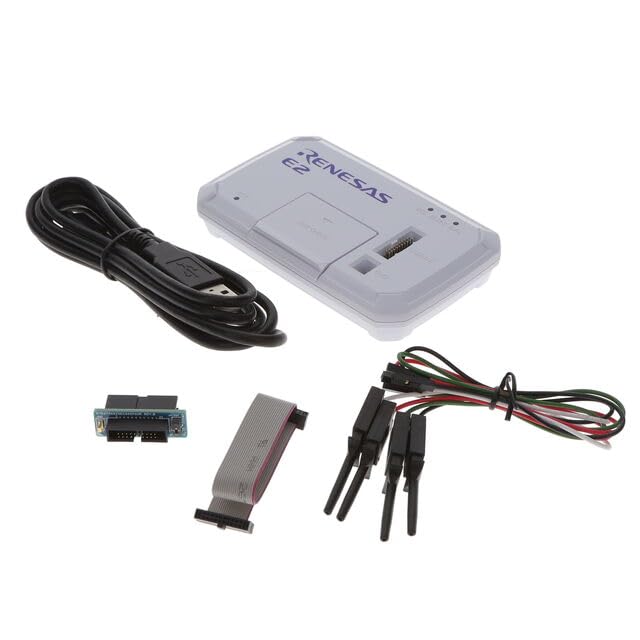
Image 1: RENESAS E2 Emulator and typical accessories. The image displays the compact E2 Emulator unit, a USB cable for connecting to a host PC, and a ribbon cable for connecting to the target microcontroller board.
4. ຕັ້ງຄ່າ
Follow these steps to set up your E2 Emulator for use:
- ຕິດຕັ້ງຊອບແວ: Install the necessary Renesas Integrated Development Environment (IDE) and E2 Emulator drivers on your personal computer. Refer to the software documentation for specific installation instructions.
- ເຊື່ອມຕໍ່ກັບ PC: Connect the E2 Emulator to your personal computer using the provided USB cable. The PC should recognize the device and install any remaining drivers automatically.
- Connect to Target Board: Connect the E2 Emulator to your target microcontroller board using the appropriate connection cable. Ensure the orientation is correct and the connection is secure. Refer to your target board's documentation for the correct debug header pinout.
- Power On Target: Apply power to your target microcontroller board. The E2 Emulator typically draws power from the USB connection, but the target board requires its own power supply.
- ຢືນຢັນການເຊື່ອມຕໍ່: Launch your Renesas IDE (e.g., e2 studio) and configure the debugger settings to detect and connect to the E2 Emulator and your target microcontroller.
5. ຄໍາແນະນໍາການດໍາເນີນງານ
The E2 Emulator supports various operations for developing and testing embedded applications.
5.1. Debugging Microcontrollers
To debug your application code:
- ໂຫຼດໂຄງການ: In your IDE, load the compiled program (e.g., .elf file) onto the target microcontroller via the E2 Emulator.
- Set Breakpoints: Place breakpoints in your source code where you want execution to pause.
- Start Debugging: Initiate the debugging session from the IDE. The program will execute on the target until a breakpoint is hit.
- Step Through Code: Use the IDE's debugging controls (step over, step into, step out) to navigate through your code line by line.
- Monitor Variables: Observe the values of variables, registers, and memory contents in real-time.
- Real-time Analysis: Utilize advanced debugging features for performance analysis and event tracing, if supported by your IDE and microcontroller.
5.2. Programming Microcontrollers
To program or re-program your microcontroller:
- ກະກຽມເຟີມແວ: Ensure you have the final firmware image (e.g., .hex, .mot, .srec file) ready for programming.
- ເລືອກອຸປະກອນ: In your IDE or dedicated programming tool, select the correct target microcontroller device.
- Configure Programmer: Configure the E2 Emulator as the programming tool.
- Erase/Program: Use the programming interface to erase the existing flash memory and then program the new firmware image onto the microcontroller.
- ຢືນຢັນ: After programming, perform a verification step to ensure the firmware was written correctly.
5.3. Supported Microcontroller Families
The E2 Emulator is compatible with the following Renesas microcontroller families:
- RH850 Series
- ຊຸດ RL78
- RX Series
For specific device support within these families, refer to the latest documentation provided by Renesas for the E2 Emulator and your chosen IDE.
6. ບໍາລຸງຮັກສາ
Proper maintenance ensures the longevity and reliable operation of your E2 Emulator.
- ທໍາຄວາມສະອາດ: Use a soft, dry cloth to clean the exterior of the emulator. Do not use liquid cleaners or solvents.
- ການເກັບຮັກສາ: Store the emulator in a clean, dry, and dust-free environment when not in use.
- ການດູແລສາຍໄຟ: Avoid bending or crimping the USB and connection cables excessively. Inspect cables regularly for damage.
- ອັບເດດຊອບແວ: Regularly check for and install the latest firmware and software updates for the E2 Emulator and your IDE from the official Renesas webເວັບໄຊ.
7. ການແກ້ໄຂບັນຫາ
If you encounter issues with your E2 Emulator, try the following troubleshooting steps:
| ບັນຫາ | ສາເຫດ / ການແກ້ໄຂທີ່ເປັນໄປໄດ້ |
|---|---|
| Emulator not detected by PC |
|
| ບໍ່ສາມາດເຊື່ອມຕໍ່ກັບໄມໂຄຣຄອນໂທຣເລີເປົ້າໝາຍໄດ້ |
|
| Programming fails or is unstable |
|
If the problem persists, consult the detailed documentation provided by Renesas or contact Renesas technical support.
8. ຂໍ້ມູນຈໍາເພາະ
Key technical specifications for the RENESAS E2 Emulator (RTE0T00020KCE00000R):
| ຄຸນສົມບັດ | ລາຍລະອຽດ |
|---|---|
| ຍີ່ຫໍ້ | RENESAS |
| ຊື່ຕົວແບບ | E2 Emulator |
| ໝາຍເລກຕົວແບບ | RTE0T00020KCE00000R |
| ເຕັກໂນໂລຊີການເຊື່ອມຕໍ່ | USB |
| ອຸປະກອນທີ່ເຂົ້າກັນໄດ້ | Personal Computer, Renesas Microcontrollers (RH850, RL78, RX series) |
| ລະບົບປະຕິບັດການ | Embedded (for the emulator itself) |
| ສື່ໃນຕົວ | ເຄື່ອງມືພັດທະນາຊອບແວ |
| ຂະໜາດລາຍການ (L x W x H) | 6"L x 3"W x 1"H |
| ພອດ USB ທັງໝົດ | 1 |
| RAM ຂະຫນາດທີ່ຕິດຕັ້ງ | 1 MB |
| ຄວາມອາດສາມາດເກັບຮັກສາຫນ່ວຍຄວາມຈໍາ | 1 Bytes (likely refers to internal storage for basic operation, not user data) |
| ເທກໂນໂລຍີຫນ່ວຍຄວາມຈໍາ RAM | DDR3 |
| ຍີ່ຫໍ້ເຄື່ອງປະມວນຜົນ | Renesas |
| ຈຳນວນເຄື່ອງປະມວນຜົນ | 1 |
9. ການຮັບປະກັນແລະການສະຫນັບສະຫນູນ
ການຮັບປະກັນ: The manufacturer's warranty description states "No". Please refer to your point of purchase or Renesas' official website for any applicable regional or reseller-specific warranty information.
ສະຫນັບສະຫນູນດ້ານວິຊາການ: For technical assistance, documentation, software downloads, and further information regarding the E2 Emulator, please visit the official RENESAS webຫຼື ຕິດຕໍ່ຊ່ອງທາງສະໜັບສະໜູນທີ່ໄດ້ຮັບອະນຸຍາດຂອງເຂົາເຈົ້າ.