
1. ການແນະນໍາ ແລະຫຼາຍກວ່າview
The GODIYMODULES Mini USB Host Shield 2.0 is designed to enable Arduino (specifically Arduino Pro Mini 3.3V/8MHz/328) to function as a USB host. This capability allows the Arduino to communicate with various USB slave devices such as USB keyboards, mice, USB flash drives, and cameras. It also supports implementation of Google ADK (Android Open Accessory Development Kit) for interaction with Android system mobile phones.
This shield utilizes an SPI interface for communication with the microcontroller and supports USB hub functionality. It operates at a voltage ຂອງ 3.3V ຊິງຕັນດີຊີ.
2. ຄຸນນະສົມບັດທີ່ສໍາຄັນ
- Enables USB host functionality for Arduino Pro Mini (3.3V/8MHz/328).
- Compatible with USB slave devices including keyboards, mice, USB flash drives, and cameras.
- Supports Google ADK for Android mobile phone communication.
- Utilizes SPI interface for microcontroller communication.
- Supports USB hub functionality.
- Compact size: 38mm * 18mm.
- ປະຕິບັດການ voltage: 3.3V ຊິງຕັນດີຊີ.
3. ການຕິດຕັ້ງແລະການເຊື່ອມຕໍ່
This Mini USB Host Shield 2.0 is designed for use with Arduino Pro Mini (3.3V/8MHz/328) and 3.3V FTDI adapters. Ensure your Arduino board operates at 3.3V to prevent damage.
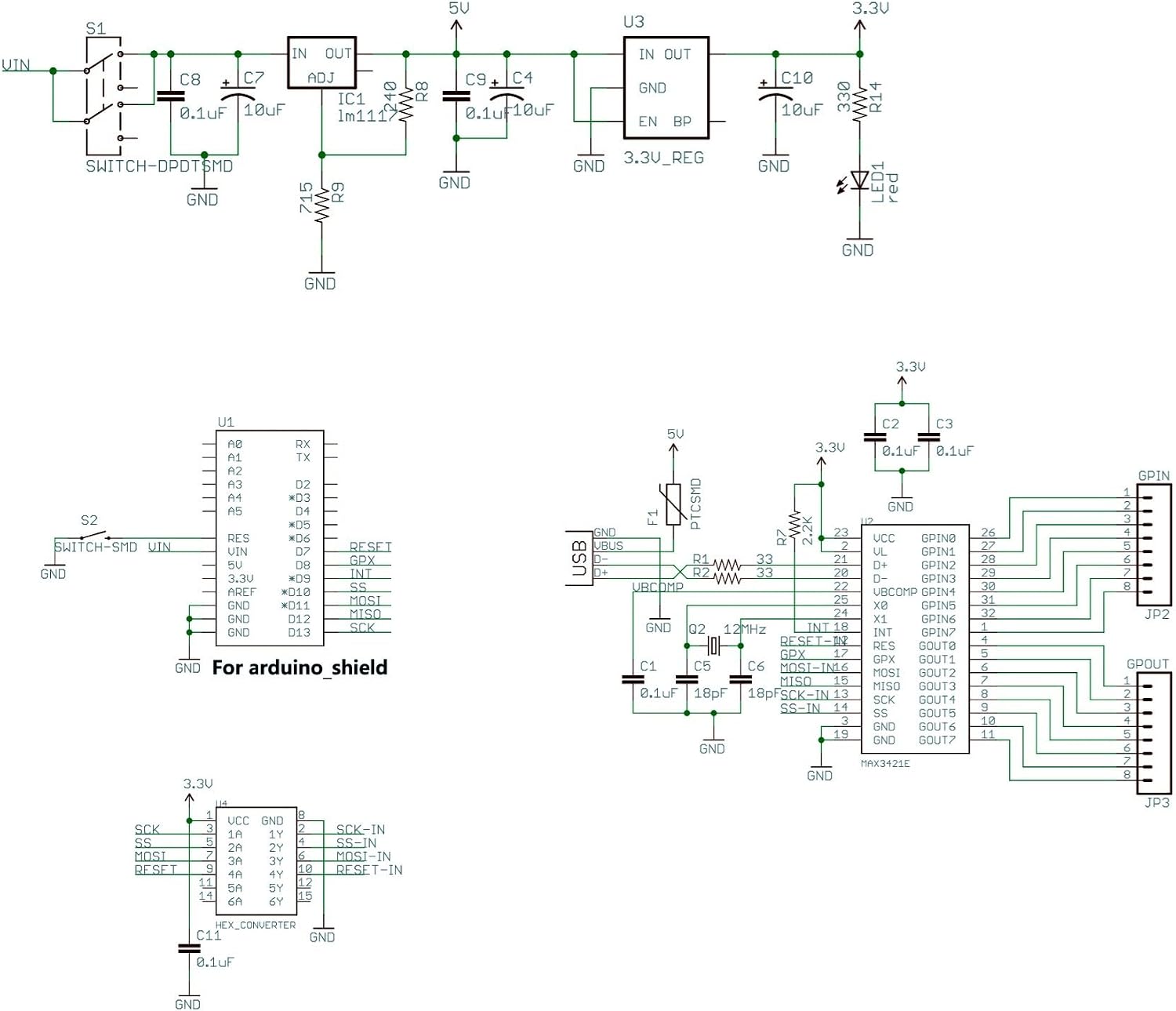
The shield connects to the Arduino via the SPI interface. Refer to the schematic diagram below for detailed pin connections and component layout.

Figure 3.1: Schematic diagram of the Mini USB Host Shield 2.0, showing power regulation, USB interface, and SPI connections.
ຈຸດເຊື່ອມຕໍ່ທີ່ສຳຄັນ:
- VCC: Connect to 3.3V power supply from your Arduino.
- GND: ເຊື່ອມຕໍ່ກັບດິນ.
- SPI Pins: MOSI, MISO, SCK, SS (Slave Select), INT (Interrupt), GPX (General Purpose I/O). These pins should be connected to the corresponding SPI pins on your Arduino Pro Mini.
- ພອດ USB: Standard USB Type-A female connector for connecting USB slave devices.
Ensure all connections are secure before applying power. Incorrect voltage or wiring can damage the shield or your Arduino board.
4. ຄໍາແນະນໍາການດໍາເນີນງານ
Once the Mini USB Host Shield 2.0 is correctly connected to your Arduino Pro Mini, you can begin programming your Arduino to interact with USB devices.
ຮູບທີ 4.1: ທາງເທິງ view of the Mini USB Host Shield 2.0, showing the USB Type-A port, MAX3421EE chip, and pin headers.

ຮູບທີ 4.2: ດ້ານລຸ່ມ view of the Mini USB Host Shield 2.0, showing additional pin labels and solder points.
Programming for USB Host Functionality:
- Install USB Host Library: Download and install the necessary USB Host Shield 2.0 library for Arduino IDE. This library provides functions to interact with various USB devices.
- ເຊື່ອມຕໍ່ອຸປະກອນ USB: Plug your desired USB slave device (e.g., keyboard, mouse, flash drive) into the USB Type-A port on the shield.
- ອັບໂຫຼດຮ່າງ: Write and upload an Arduino sketch that utilizes the USB Host library to detect and communicate with the connected device. Examples for common devices are usually included with the library.
Google ADK Implementation:
For Google ADK applications, the product provides compiled APK installation packages and ADK source files. These resources are compatible with the shield and can be used to develop Android applications that interact with your Arduino project via the USB Host Shield.
5. ຂໍ້ມູນຈໍາເພາະ
| ພາລາມິເຕີ | ມູນຄ່າ |
|---|---|
| ຍີ່ຫໍ້ | GODIYMODULES |
| ຊື່ຕົວແບບ | Mini USB Host Shield 2.0 |
| ເຕັກໂນໂລຊີການເຊື່ອມຕໍ່ | USB |
| ອົງປະກອບລວມ | 1pcs Mini USB Host Shield |
| ຄວາມເຂົ້າກັນໄດ້ຂອງລະບົບປະຕິບັດການ | Android (for ADK) |
| ອຸປະກອນທີ່ເຂົ້າກັນໄດ້ | USB keyboard, mouse, USB disk, Camera, Android system mobile phone |
| Processor Brand (Controller) | Atmel (referring to compatible Arduino) |
| ຂະໜາດສິນຄ້າ | 38mm x 18mm |
| ນ້ຳໜັກສຸດທິ | 4.5g |
| ການດໍາເນີນງານ Voltage | DC 3.3V |
6. ການແກ້ໄຂບັນຫາ
- ບັນຫາຄວາມເຂົ້າກັນໄດ້: This shield is primarily designed for Arduino Pro Mini (3.3V/8MHz/328). While it may work with Arduino Uno with appropriate level shifters, it is generally not compatible with Arduino Mega 2560 without significant modifications and advanced knowledge. Ensure your Arduino board operates at 3.3V or use proper voltage level conversion.
- Unclear Pin Labels: If the silk screening on the board for pin identification is unclear, refer to the provided schematic diagram (Figure 3.1) for accurate pin assignments and connections.
- ອຸປະກອນບໍ່ກວດພົບ:
- Verify all connections between the shield and Arduino are correct and secure.
- Ensure the USB Host library is correctly installed and the sketch is properly configured for the specific USB device.
- Check the power supply to the shield and Arduino. Insufficient power can prevent USB devices from functioning.
- Test with a different USB device to rule out issues with the device itself.
7. ບໍາລຸງຮັກສາ
To ensure the longevity and proper functioning of your Mini USB Host Shield 2.0, follow these general maintenance guidelines:
- ຈັດການດ້ວຍຄວາມລະມັດລະວັງ: Electronic components are sensitive. Avoid dropping the board or subjecting it to excessive force.
- ຮັກສາແຫ້ງ: Protect the board from moisture and liquids, which can cause short circuits and corrosion.
- ຄວາມສະອາດ: Keep the board free from dust and debris. Use a soft, dry brush or compressed air for cleaning if necessary.
- ການເກັບຮັກສາທີ່ເຫມາະສົມ: When not in use, store the shield in an anti-static bag to protect it from electrostatic discharge.
8. ການຮັບປະກັນແລະການສະຫນັບສະຫນູນ
This GODIYMODULES Mini USB Host Shield 2.0 comes with a ການຮັບປະກັນຂອງຜູ້ຜະລິດ 2 ປີ. ການຮັບປະກັນນີ້ກວມເອົາຂໍ້ບົກພ່ອງຂອງວັດສະດຸແລະການເຮັດວຽກພາຍໃຕ້ການນໍາໃຊ້ປົກກະຕິ.
For technical support, inquiries, or warranty claims, please contact GODIYMODULES directly through their official channels or the retailer from whom the product was purchased. Please provide your purchase details and a clear description of the issue when seeking support.