
ແນະນຳ
Thank you for choosing the VonHaus Electric HVLP Spray Gun. This manual provides essential information for the safe and effective use, maintenance, and troubleshooting of your new paint sprayer. Please read these instructions thoroughly before initial use and retain them for future reference.

The VonHaus Electric HVLP Spray Gun, including the main unit, spray gun attachment, air hose, and cleaning tools.
ຂໍ້ມູນຄວາມປອດໄພ
ຄໍາເຕືອນ: ປະຕິບັດຕາມຄວາມລະມັດລະວັງດ້ານຄວາມປອດໄພຂັ້ນພື້ນຖານທຸກຄັ້ງເມື່ອໃຊ້ເຄື່ອງໃຊ້ໄຟຟ້າເພື່ອຫຼຸດຜ່ອນຄວາມສ່ຽງຕໍ່ການເກີດອັກຄີໄພ, ໄຟຟ້າຊອດ, ແລະການບາດເຈັບສ່ວນບຸກຄົນ.
- ອ່ານຄໍາແນະນໍາທັງຫມົດ: ຄຸ້ນເຄີຍກັບການຄວບຄຸມແລະການນໍາໃຊ້ທີ່ເຫມາະສົມຂອງອຸປະກອນ.
- ໃສ່ອຸປະກອນປ້ອງກັນສ່ວນບຸກຄົນທີ່ເຫມາະສົມ (PPE): This includes safety glasses, a respirator mask, gloves, and protective clothing.
- ຮັບປະກັນການລະບາຍອາກາດທີ່ເຫມາະສົມ: Use the spray gun in a well-ventilated area to avoid inhaling fumes.
- ວັດສະດຸໄວໄຟ: ຫ້າມສີດວັດສະດຸໄວໄຟໃກ້ກັບແປວໄຟ, ໄຟນຳທາງ ຫຼື ແຫຼ່ງຕິດໄຟອື່ນໆ.
- ຄວາມປອດໄພໄຟຟ້າ: Ensure the power cord is undamaged and connected to a grounded outlet. Do not expose the unit to rain or wet conditions.
- ຮັກສາເດັກນ້ອຍ ແລະຜູ້ຢືນຢູ່ຫ່າງໆ: Do not allow children or untrained persons to operate the spray gun.
- ຄວາມປອດໄພ workpiece: Always ensure the item being sprayed is stable and secure.
- ທໍາຄວາມສະອາດ: ສະເຫມີຕັດການເຊື່ອມຕໍ່ໄຟຟ້າກ່ອນທີ່ຈະທໍາຄວາມສະອາດຫຼືດໍາເນີນການບໍາລຸງຮັກສາ.
ສ່ວນປະກອບຂອງຜະລິດຕະພັນ
The VonHaus Electric HVLP Spray Gun consists of several key parts:
- ຫນ່ວຍງານມໍເຕີ: The main power unit that generates airflow.
- ປືນສີດ: The handheld component where paint is atomized and sprayed.
- ທໍ່ອາກາດ: Connects the motor unit to the spray gun.
- ຕູ້ໃສ່ສີ: Attaches to the spray gun to hold the paint material.
- Nozzle/Air Cap: Controls the spray pattern.
- ປຸ່ມຄວບຄຸມການໄຫຼເຂົ້າ: Adjusts the volume of paint sprayed.
- Viscosity Cup: Used for measuring paint viscosity.
- Cleaning Brush & Needle: For maintenance and cleaning.

ໃກ້ຊິດ view of the spray gun's trigger, flow control knob, and adjustable valve, which allow for precise control over paint application.
ຕັ້ງຄ່າ
1. Material Preparation (Thinning & Straining)
Proper material preparation is crucial for optimal spray performance and to prevent clogging. Always refer to the paint manufacturer's instructions for thinning recommendations.
- Stir thoroughly: Always stir the spraying material thoroughly before measuring viscosity.
- Measure viscosity: Use the provided viscosity cup. Dip the cup completely into the material and measure the time in seconds until the cup empties. This is the 'Runout Time'.
- ການເຮັດໃຫ້ບາງ: If the runout time is too long, thin the material with the appropriate solvent (e.g., water for latex, mineral spirits for oil-based paints) until the desired viscosity is achieved. Do not use materials with a flashpoint below 102°F (39°C). Maximum viscosity: 60 DIN-S.
- Strain material: Always strain the prepared material to remove any impurities or lumps that could clog the nozzle.

Diagram illustrating the use of the viscosity cup and a thinning chart providing recommended runout times for various materials like oil enamel, oil-based primer, oil stain, clear sealer, polyurethane, and varnish.
2. ສະພາ
- Connect the air hose to both the motor unit and the spray gun securely.
- Fill the paint container with your prepared and strained material.
- Attach the filled paint container to the spray gun, ensuring it is tightly sealed.
- Select the desired spray pattern by rotating the air cap.
ການດໍາເນີນງານ
1. ການປັບຮູບແບບສີດ
The spray gun offers three adjustable spray patterns: horizontal, vertical, and circular. To change the pattern, rotate the air cap to align the 'ears' with the desired orientation:
- ແນວນອນ: ສຳລັບການສີດພົ່ນຂຶ້ນ ແລະ ລົງ.
- ແນວຕັ້ງ: For spraying side-to-side motions.
- ວົງວຽນ: ສຳລັບພື້ນທີ່ຂະໜາດນ້ອຍ ຫຼື ວຽກງານລະອຽດ.
2. ການຄວບຄຸມການໄຫຼ
The flow control knob on the spray gun allows you to adjust the volume of paint being sprayed. Turn the knob clockwise to decrease flow and counter-clockwise to increase flow. Always test on a scrap piece of material to find the optimal setting.
3. ເຕັກນິກການສີດພົ່ນ
- ໄລຍະທາງ: Hold the spray gun approximately 6-12 inches (15-30 cm) from the surface.
- ການເຄື່ອນໄຫວ: Move the gun in smooth, even strokes, keeping it perpendicular to the surface. Overlap each pass by about 50% to ensure even coverage.
- Trigger control: Press the trigger fully to start spraying and release it at the end of each stroke.
- ການປະຕິບັດ: Always practice on a piece of scrap material to get a feel for the spray pattern and flow before starting your project.

A user demonstrating the VonHaus Electric HVLP Spray Gun in action, applying paint to a wooden surface, showcasing its use for outdoor projects.
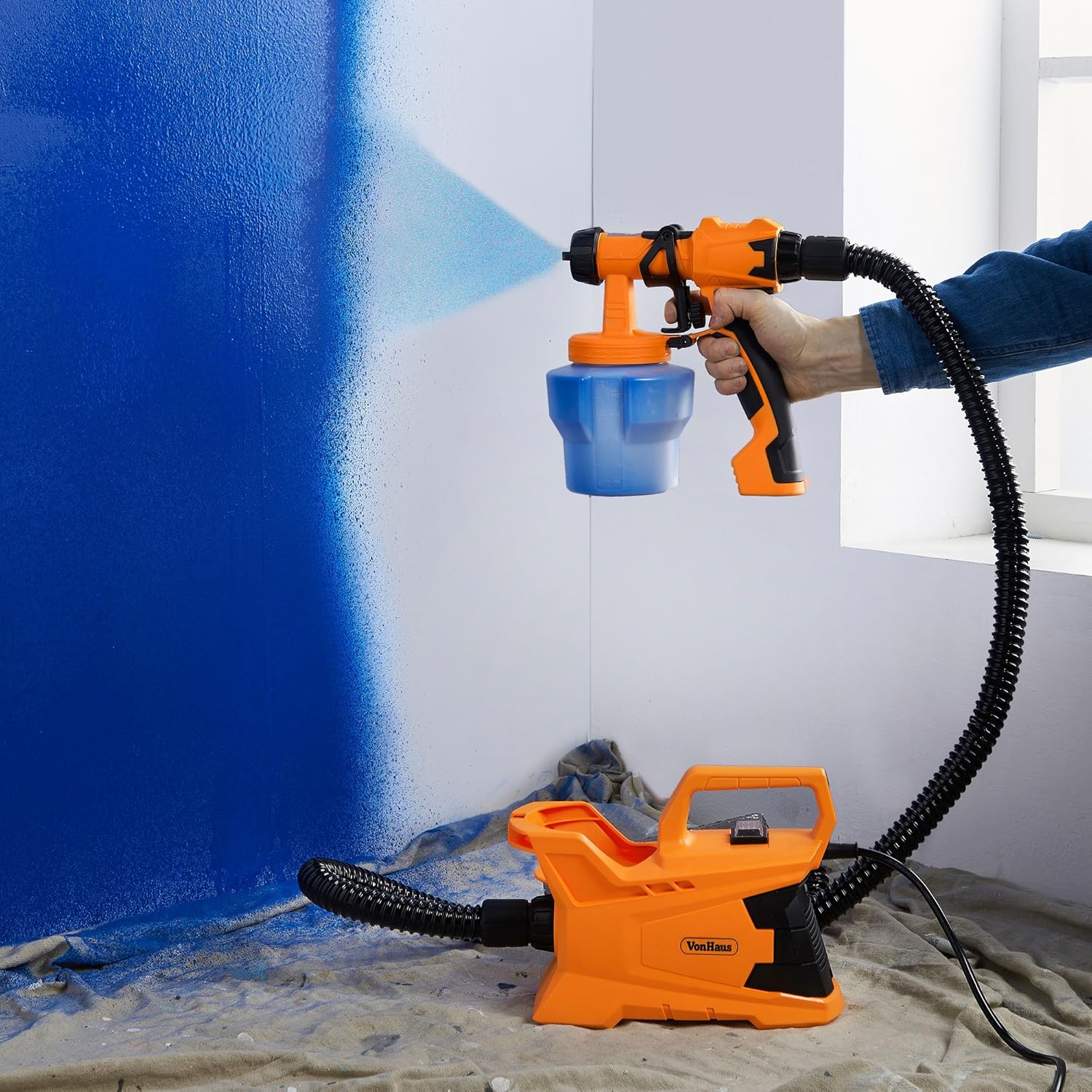
The VonHaus Electric HVLP Spray Gun being used to paint an indoor wall, illustrating its versatility for various painting tasks.
ບໍາລຸງຮັກສາ
Thorough cleaning after each use is essential to prolong the life of your spray gun and ensure consistent performance.
1. ຂັ້ນຕອນການທໍາຄວາມສະອາດ
- ຕັດການເຊື່ອມຕໍ່ພະລັງງານ: ຖອດປລັກເຄື່ອງອອກຈາກແຫຼ່ງພະລັງງານກ່ອນທຳຄວາມສະອາດທຸກຄັ້ງ.
- Empty container: Empty any remaining paint from the container back into its original can.
- Rinse container: Fill the container with the appropriate cleaning solution (water for latex, solvent for oil-based paints) and spray it through the gun into a waste container until clear.
- Disassemble: Unscrew the paint container, remove the air cap, nozzle, and needle.
- ອົງປະກອບທີ່ສະອາດ: Use the provided cleaning brush and needle to thoroughly clean all disassembled parts, including the container, air cap, nozzle, and fluid tip. Pay special attention to small holes and crevices.
- Wipe down: Wipe the exterior of the spray gun and motor unit with a damp ຜ້າ.
- Dry and reassemble: Ensure all parts are completely dry before reassembling the spray gun.

A user cleaning the paint container and spray gun components under running water in a sink, demonstrating the ease of post-project cleanup.
2. ການເກັບຮັກສາ
Store the cleaned and reassembled spray gun in a dry, cool place, away from direct sunlight and out of reach of children.
ການແກ້ໄຂບັນຫາ
| ບັນຫາ | ສາເຫດທີ່ເປັນໄປໄດ້ | ການແກ້ໄຂ |
|---|---|---|
| ບໍ່ມີສີດຫຼືສີດອ່ອນໆ | Clogged nozzle/fluid tip; Insufficient material; Air hose disconnected; Motor unit not running. | Clean nozzle/fluid tip; Refill container; Check air hose connection; Ensure power is on and motor is running. |
| ຮູບແບບສີດທີ່ບໍ່ສະເຫມີກັນ | Incorrect air cap setting; Material too thick; Partially clogged nozzle. | Adjust air cap; Thin material further; Clean nozzle thoroughly. |
| ສີຮົ່ວ ຫຼື ຢອດ | Material too thin; Nozzle loose; Air cap not seated correctly; Low material level. | Thicken material slightly; Tighten nozzle; Re-seat air cap; Refill container. |
| Motor unit overheating | Prolonged continuous use; Blocked air vents. | Allow unit to cool down; Clear any obstructions from air vents. |
ຂໍ້ມູນຈໍາເພາະ
- ຍີ່ຫໍ້: ວອນຮົວ
- ຕົວແບບ: B079TYFFZY
- ຊື່ຮູບແບບ: ປືນ
- ຮູບແບບການສີດ: 3 (Horizontal, Vertical, Circular)
- ການຄວບຄຸມການໄຫຼເຂົ້າ: ສາມາດປັບໄດ້
- ຄວາມຫນືດສູງສຸດ: 60 DIN-S (approximate, refer to thinning chart)
ການຮັບປະກັນ & ສະຫນັບສະຫນູນ
For warranty information or technical support, please refer to the documentation provided at the time of purchase or contact VonHaus customer service directly. Keep your proof of purchase for any warranty claims.
For further assistance, visit the official VonHaus webເວັບໄຊ ຫຼືຕິດຕໍ່ທີມງານຊ່ວຍເຫຼືອລູກຄ້າຂອງເຂົາເຈົ້າ.